


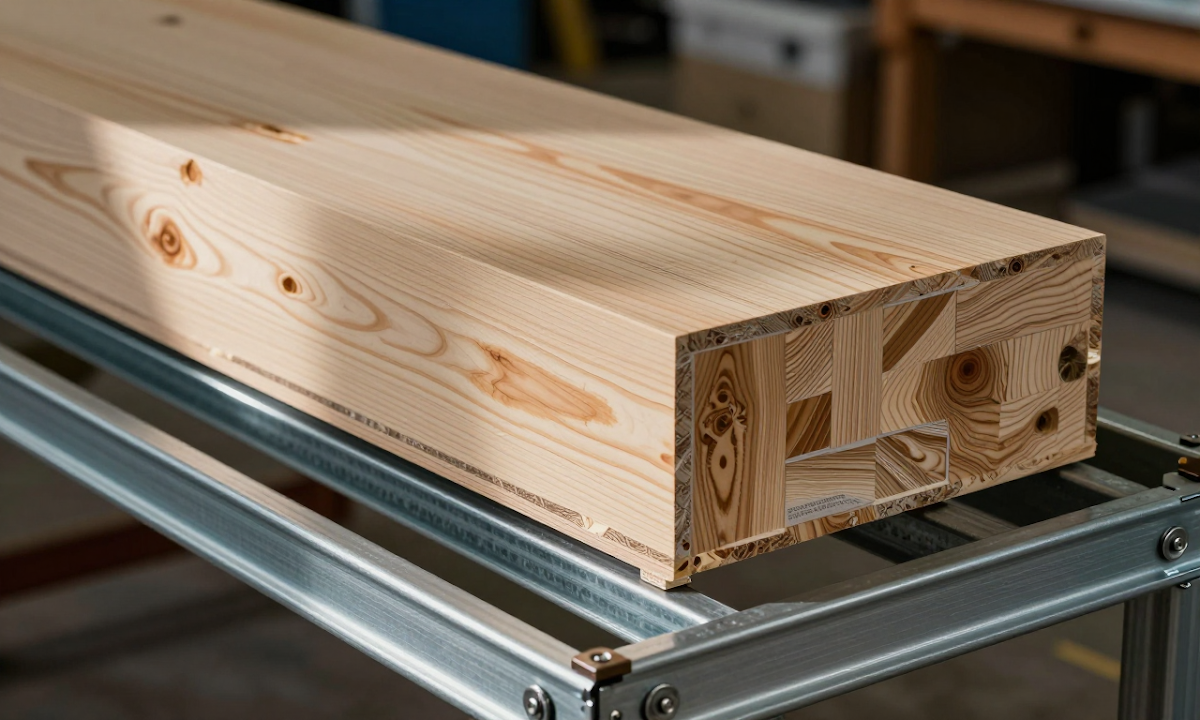
Selecting plywood thickness is one of the most foundational decisions in boat construction because the floor acts as the structural foundation that supports every other component on deck. When a builder chooses a board, they aren't just picking a material; they are balancing how much weight the structure can carry against how quickly it can be built and shipped.
In a typical layup, plywood floors serve as the primary load-bearing members that bridge decks and bulkheads, distributing stresses from heavy equipment and crew. A common mistake is assuming thicker always equals better; in reality, the correct choice involves balancing structural stiffness with production speed, as over-engineering can lead to excessive weight and slower manufacturing cycles.
By choosing the right plywood thickness, you ensure that the floor structure remains rigid under heavy loads, prevents deck buckling from high-traffic zones, and simplifies bulkhead construction by providing a flat, stable surface for fasteners.
By the end, you will have a clear framework for calculating the ideal thickness based on actual engineering principles rather than guesswork.
In this article:
- Structural role of plywood thickness in boat floors
- Why marine grade plywood is required for floors
- Common industry standards for different boat sizes
- Calculating thickness based on span and loaded weight
- Design tradeoffs between stiffness and production speed
- Final Thoughts
Structural role of plywood thickness in boat floors
The thickness of plywood floors is a primary factor in determining how a deck structure resists deformation under load. In boat construction, floor panels must be rigid enough to prevent sagging when crew members walk on them and strong enough to support heavy cargo, tools, or equipment.
A thicker board provides more material to resist bendinged forces. When a person stands on a thin panel, the wood fibers compress and the surface deflects; using a thicker sheet increases the cross-sectional area of the laminate, which directly improves its resistance to these forces. In naval engineering, this is governed by the relationship between thickness and stiffness, where even small increments in plywood thickness significantly impact how much weight a floor can safely carry before permanent deformation occurs.
Load distribution and deck deflection
The structural role of wood thickness manifests most clearly through load distribution. A thin piece of plywood acts like a thin ruler: it is easy to bend, but when the center is supported by numerous cross-ties, its effective span shortens, making it stiffer. This principle allows designers to optimize floor thickness based on how weight will be distributed across the deck.
For example, a 24mm (1-inch) thick panel might suffice for a walkway where load is concentrated in one area, while a 30mm or higher board may be required where heavy equipment and crew movement are constant. By choosing thicker panels, builders can also distribute loads more evenly across the underlying deck framing, reducing the likelihood of local buckling.
Weight distribution and structural behavior
While thickness is a primary driver, it does not work in isolation; its effect is amplified by how or where the wood is fastened. A thicker laminate layer distributes loads more evenly across the underlying deck framing because each individual plyed sheet contributes more to the overall stiffness of the floor assembly. This creates a more predictable structural behavior when calculating and designing for different load conditions.
Stiffness vs production speed tradeoffs
The selection of thickness is often a balance between theoretical stiffness and practical construction speed. Thicker panels provide higher stiffness, but they also increase the risk of "oil-canning" — where the surface buckles under foot pressure due to slight variations in laminate tension. A consistent thickness across all floor areas simplifies production because it allows for standardized cuttinged lists and more predictable assembly times.
Impact on rest of deck structure
The thickness of a floor panel also dictates how it interacts with surrounding components like bulkheads, transom floors, and cross-ties. A thicker board can be fastened through the laminate more securely, reducing the risk of fastener pull-through in heavy loads. Furthermore, uniform thicknesses across different sections of the deck reduce production friction by allowing for standardized laminationed schedules.
Why marine grade plywood is required for floors
Using standard construction plywood in a boat floor is a common mistake that can lead to structural failure over time. While both options share the same basic geometry, they differ fundamentally in how they respond to moisture and decay. Marine grade plywood is manufactured using high-quality veneers (such as Okoume or Merbau) bonded with water-resistant adhesive systems.
Standard construction plywood is intended for structures that remain dry once built. In a boat environment, any wood exposed to water will eventually swelled, delaminate, and rot. Marine grade alternatives are engineered to resist these exact issues by using adhesives like WBP (Water Boil Proof) or WBP-1, which prevent the glue lines from breaking down when moisture is present.
The role of veneer species
Marine plywoods use specific wood species that improve on the common whitewood used in construction grades. Okoume and Merbau are preferred because they offer superior resistance to delamination and decay, which is critical for floor components that must remain dimensionally stable under load.
- Okoume: A light, durable veneer that provides a balance of structural performance and moisture resistance suitable for large deck and bulkhead panels.
- Merbau: Known for its durability and ability to resist rot; it is often used as the top layer of marine plywood to improve surface finish and water-proofability.
Dimensional stability and adhesive systems
The primary difference between grades lies in how moisture affects the wood's dimensions. In construction plywood, trapped moisture can cause veneers to swell unevenly because the glue isn't designed to resist it. Marine grade adhesives are formulated so that when water enters the board, the resin reacts by swelling and sealing itself, rather than breaking down.
- WBP (Water Boil Proof): Resists delamination even after boiling in water; this is a requirement for any component exposed to liquid.
- WBP-1: An enhanced version of WBP that also resists glue line failure from moisture, making it the standard choice for floors and bulkheads where surface finish matters.
Choosing marine grade plywood ensures that the floor remains a reliable structure rather than a component that becomes loose or structurally compromised by rot. By using these materials in place of cheaper alternatives, builders avoid future repairs caused by moisture-induced delamination.
Common industry standards for different boat sizes
Boat floor thickness typically scales with vessel size because larger vessels must accommodate heavier loads, higher stresses, and more complex structural roles. Using a thinner sheet on a large boat leads to excessive deflectioned that can affect hull integrity, while using thick sheets everywhere creates unnecessary weight.
The following thicknesses are the industry standards for floor construction in commercial and recreational craft. Each thickness is chosen based on how much of a role the plywood plays in distributing loads across deck framing and bulkheads.
1/2-inch (12.7mm) - Lightweight applications
A 1/2-inch sheet is rarely used as a primary load-bearing floor for large boats, but it is the standard for components that require rigidity without significant weight.
- Small skiffs and tender panels: Used in small fishing vessels where a plywood thickness of 3/4" would be overkill.
- Bulkhead reinforcement: Often used as skinning over larger frames to create large, flat surfaces that do not experience high-point loads.
- Transom floor areas: In some designs, it is the base layer for light bulkhead construction where the primary load is distributed by a heavy frame.
5/8-inch (16mm) - The "middle ground" standard
A 5/8-inch thickness is a popular industry choice because it often provides significant stiffness gains over 1/2" while remaining easier to work with than 3/4".
- Transom floor panels: This is frequently the minimum thickness for large transom floors in medium-sized vessels where a flat, wide sheet must resist warping.
- Deck framing reinforcement: Used when the deck needs to be stiff enough to prevent oil-canning but remains light enough to keep the boat responsive.
A 5/8" layer is also commonly used as a "compositeed" or laminated floor, where two layers are bonded together to achieve specific stiffness targets.
3/4-inch (19mm) - The industry benchmark
A 3/4-inch sheet is the most common plywood thickness in boat building. It provides a balance of strength, durability, and ease of production that makes it the default choice for many designers.
- Medium vessels (20–50ft): This is the standard floorboard size for medium commercial fishing boats and passenger ferries where deck-side loads are significant.
Because 3/4" plywood is a common product, it also serves as the benchmark against which other thicknesses are weighed during structural analysis.
1-1/8 inch (29mm) - High-stress and heavy-load applications
A 1-1/8" sheet is essentially a laminated pair of two 1/2" sheets bonded together. It provides exceptional stiffness and is used when the floor must resist high point loads or large areas of deflection.
- Large vessels (50ft+): Used in heavy-load floors where multiple workers, equipment, or machinery move across the deck, necessitating a plywood thickness that can span larger distances between frames.
- Bulkhead construction: In heavy-duty hulls, 1-1/8" panels are used for bulkhead skins to ensure that structural members do not deform under high loads.
Calculating thickness based on span and loaded weight
Selecting the plywood thickness for a floor depends on the relationship between the span of the structure and the weight it must carry. In boat construction, the floor acts as a diaphragm; if the distance between frames (the span) increases, the floor must be thicker to resist bending and prevent oil-canning or deformation under load.
The primary calculation factor is the maximum unsupported span of the deck framing. Because plywood is a relatively thin material, it relies on its inherent modulus of elasticity to resist deflection. As the span grows, the required thickness increases because longer spans are more susceptible to bending moments caused by concentrated loads at anchor points.
Scaling thickness with frame spacing
For small craft or light-load areas where deck frames are spaced closely together (e.g., 12 inches), a thinner sheet of plywood is sufficient because the material is never "freely" bent. For larger vessels or heavy-load zones, wider spacing requires thicker sheets to maintain structural integrity.
- Short spans (12–18 inches): Usually require 3/8 inch or 1/2 inch plywood depending on the specific load.
- Medium spans (24–36 inches): Often require 5/8 inch to 3/4 inch plywood, as the material must bridge larger gaps without excessive deflection.
- Long spans (over 48 inches): Requires thicker sheets or multiple layers of plywood glued together, and often requires a denser grid of deck framing to prevent oil-canning under foot traffic.
Weight distribution and the payload factor
The total weight that will be distributed across the floor surface directly influences the required thickness. A heavy load concentrates stress on the plywood; if the floor is overloaded, even a thick sheet will flex excessively.
- Light loads: Walking surfaces or storage areas where the primary risk is deformation from foot traffic typically call for thinner sheets to save weight and production time.
- Heavy loads: Areas designed to hold heavy machinery, heavy tools, or high-density cargo require thicker plywood because a larger percentage of the load is transferred into the rest of the structure through the floor itself.
- A note on span vs. thickness: A common rule of thumb in naval engineering for wood flooring is that as the allowable deflection decreases (due to higher loads), the required thickness must increase proportionally.
Design tradeoffs between stiffness and production speed
Selecting a plywood thickness involves balancing structural rigidity against production speed, as thicker panels are not universally better. In boat construction, stiffness provides resistance to deformation under load, while thinner sheets can be easier and faster to work with. The core engineering trade-off lies in the relationship between material thickness and the mechanical behavior of the structure.
A common misconception is that a thicker sheet automatically makes a floor stronger. In reality, plywood has a finite modulus of elasticity; doubling the thickness does not double the stiffness linearly, but it does increase production costs and build time exponentially. Using overly thick panels where thinner ones would suffice can lead to over-engineered components that slow down the assembly process without providing meaningful structural benefits.
Production speed and complexity
- Cutting and routing: Thick sheets require more passes on a router or CNC, increasing time spent in the shaping phase.
- Fastener selection: Thicker panels often necessitate larger diameter fasteners with longer embedment depths to achieve proper load transfer, complicating the drilling cycle.
- Machining tolerance: Working with thick wood requires tighter control over blade depth and feed rates; a slight error on a 12mm sheet is negligible, but it becomes critical when working with thicker panels like those used in heavy-duty deck framing.
To optimize production speed, builders often choose the thinnest plywood thickness that meets the required stiffness of the specific component. This approach minimizes material handling and machining time while ensuring a high-quality result. The goal is to select the "right" thicknessed panel for each individual part rather than applying a blanket rule across all boat floors.
Cost versus structural performance
- Material cost: Marine grade plywood costs increase with thickness, but these savings are only realized if the chosen dimension actually improves stiffness.
- Weight distribution: Thicker panels add weight to the structure; in large vessels where deck rigidity is paramount, choosing a thinner sheet and adding structural members (ribs) is often more efficient than using excessively thick plywood alone.
- Quality of finish: Oversized thickness can lead to "over-engineering" that results in heavier components with less meaningful stiffness gains, complicating the final sanding and finishing stages.
Final Thoughts
Selecting the correct plywood thickness for boat floors is a balance between structural rigidity, production efficiency, and material cost. Because floor systems bear the weight of engines, crew, and equipment, the choice directly impacts both the durability of the deck framing and the complexity of bulkhead construction.
The three primary takeaways can be summarized by how thickness influences the build:
- Stiffness versus production speed. Thicker plywood increases structural stiffness and reduces fastener-sinking issues, but it also requires more careful milling and slower glue-up times during assembly.
- Material selection is critical for moisture resistance. Marine grade plywood is required because its core (e.g., okoume or poplar) can withstand the water-saturated conditions of a boat hull, whereas standard construction plywood would delaminate over time.
- The "correct" thickness depends on span and load. For example, a transomed floor might require 12mm to 19mm (1/2" to 3/4") depending on the heaviest component it supports; heavier loads demand thicker sheets to prevent excessive deflection.
Choosing the right plywood thickness is ultimately a design trade-off where every layer of wood must be justified by its contribution to the overall strength and longevity of the boat's deck system. A well-engineered floor uses the minimum necessary thickness for each specific load case, ensuring a balanced build that remains stable under operational stress.


No comments:
Post a Comment